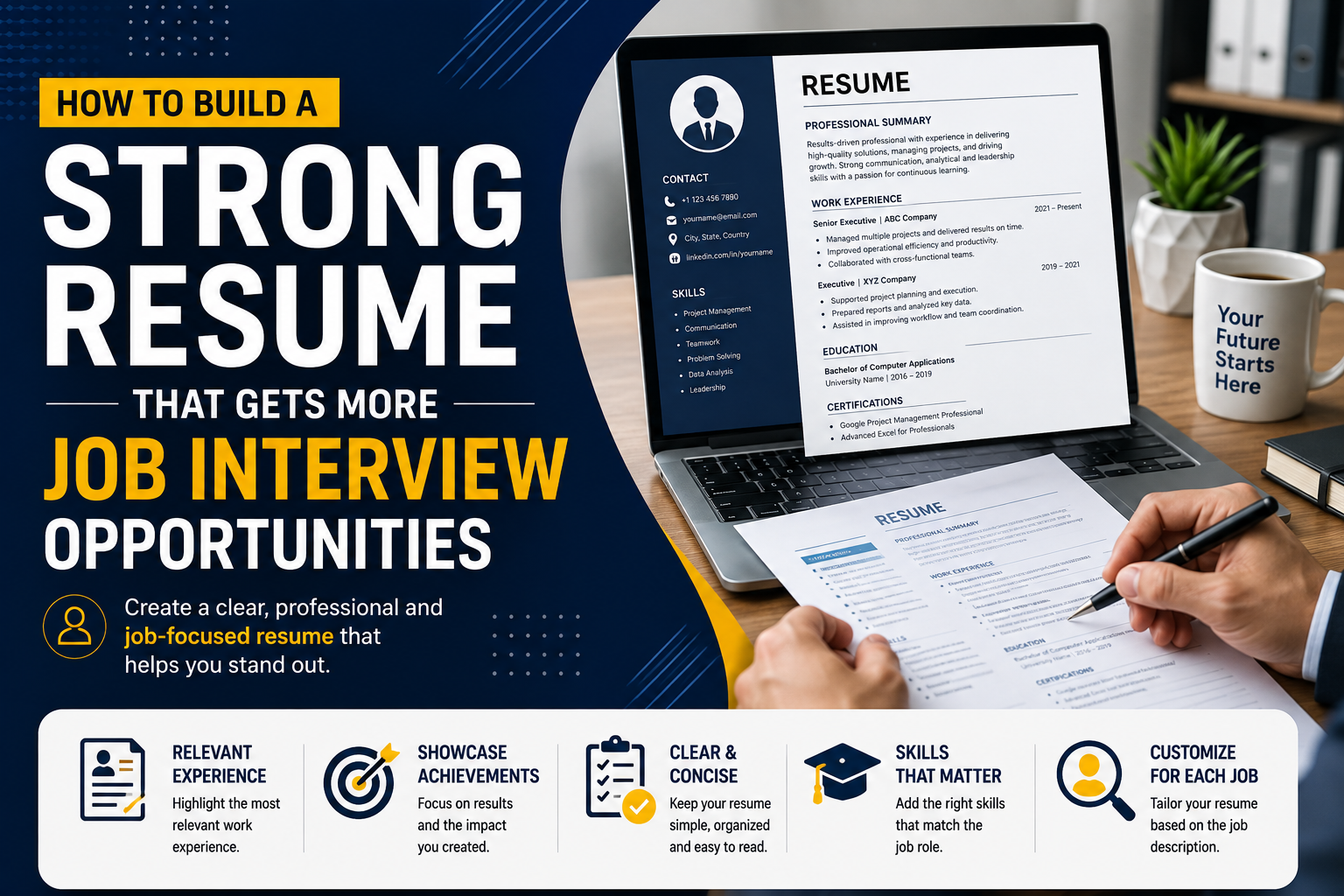
How to Build a Strong Resume That Gets More Job Interview Opportunities
Your resume is often one of the first things a potential employer sees when you apply for a job. A strong resume does not guarantee an interview, but it can help you clearly communicate your skills, experience, and qualifications.
Many job seekers make the mistake of treating a resume as a document they create once and never update. Your resume should evolve as your skills, projects, experience, and career goals change.
Here are practical tips to help you build a stronger and more professional resume.
1. Start With a Clear Professional Introduction
The top section of your resume should quickly help the reader understand who you are professionally. Depending on your experience level, you can include a short professional summary that highlights your key skills and career focus.
For example, instead of writing a vague statement, focus on the type of work you do and the skills you bring.
Keep this section short, relevant, and easy to understand.
2. Customize Your Resume for the Role
One resume may not be equally effective for every job. Before applying, carefully read the job description and understand the skills and responsibilities required for the position.
Highlight the experience and skills that are genuinely most relevant to the role. You should never add false experience, but you can organize your existing experience to make the most relevant qualifications easier to find.
A focused resume can help an employer quickly understand why your profile may be relevant to the opportunity.
3. Highlight Relevant Skills
Create a skills section that includes abilities relevant to your career and the type of roles you are seeking.
Depending on your profession, your skills may include:
- Technical skills and software knowledge
- Communication skills
- Project management
- Sales and customer relationship skills
- Design or creative tools
- Programming languages or frameworks
- Marketing and analytics skills
Avoid creating an unnecessarily long list of every skill you have ever used. Prioritize the skills that are most relevant and that you can confidently discuss during an interview.
4. Focus on Your Achievements, Not Only Responsibilities
When describing previous work, do not only list your daily responsibilities. When possible, explain the projects you worked on, problems you helped solve, or results you contributed to.
For example, instead of simply writing that you were responsible for managing a website, describe the type of work you performed and the improvements or outcomes you helped achieve.
This gives more context to your experience.
5. Keep the Resume Easy to Read
A good resume should be visually clear and organized. Use consistent headings and make important information easy to find.
A typical structure may include:
- Professional summary
- Key skills
- Work experience
- Projects
- Education
- Certifications or relevant training
Do not overcrowd the page with unnecessary information. Clear formatting can make your professional background easier to review.
6. Include Relevant Projects
Projects can be especially valuable for students, freshers, freelancers, and professionals changing careers.
A strong project section can demonstrate how you applied your skills in a practical situation. For each important project, briefly explain what you worked on, what tools or skills you used, and what your role was.
If appropriate, you can also include a portfolio or professional work link.
7. Keep Your Information Accurate
Never include incorrect qualifications, fake experience, or skills that you cannot actually demonstrate. During interviews, employers may ask detailed questions about the information included in your resume.
An honest resume creates a stronger foundation for professional conversations and long-term career growth.
8. Update Your Resume Regularly
Do not wait until you urgently need a job to update your resume. Add important projects, newly developed skills, certifications, and achievements as they happen.
Keeping your resume updated can make it easier to apply when a relevant opportunity appears.
9. Check for Errors Before Applying
Before sending your resume, review it carefully. Check spelling, grammar, dates, job titles, contact details, and formatting consistency.
Small errors can create an unprofessional impression, especially when they make important information difficult to understand.
If possible, review the document again after some time or ask someone you trust to check whether it is clear and easy to read.
10. Keep Improving Your Professional Profile
A resume is only one part of your professional profile. Your skills, work experience, portfolio, professional communication, and online presence can also influence career opportunities.
Continue learning and gaining practical experience. As your professional abilities improve, update your resume to reflect your current strengths.
Final Thoughts
A strong resume should clearly communicate your professional value without unnecessary complexity. Focus on relevant skills, real experience, practical projects, and clear achievements.
Remember that a resume is not simply a list of jobs. It is a structured summary of your professional journey and the value you may be able to bring to an employer or organization.
Keep it accurate, relevant, well-organized, and updated. Combined with strong skills and proper interview preparation, a professional resume can help you present yourself more effectively when new opportunities arise.
