
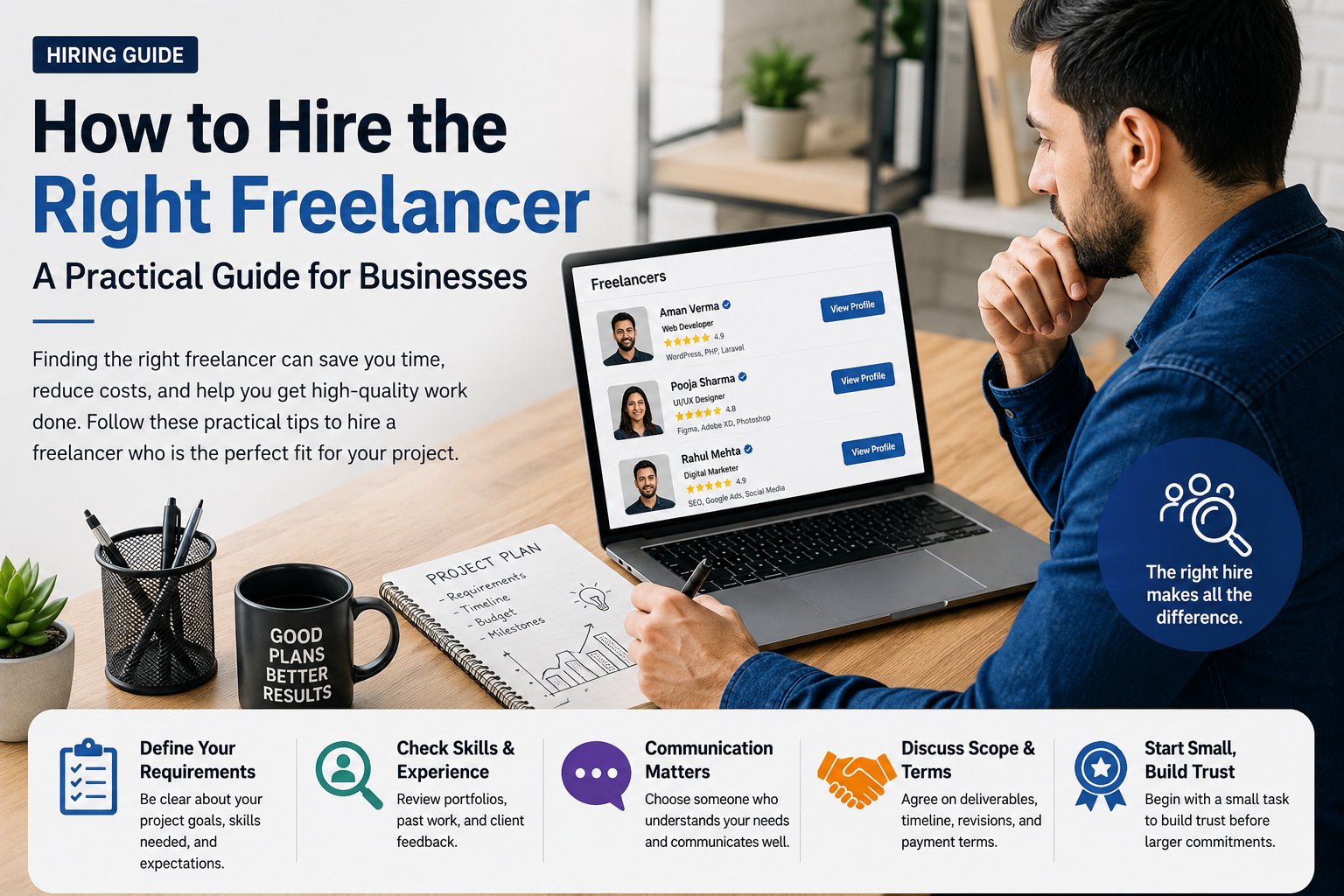
How to Hire the Right Freelancer for Your Project
Hiring a freelancer sounds simple. You post your requirement, receive a few proposals, compare prices, and choose someone.
In reality, it is not always that straightforward.
A freelancer who looks perfect on paper may not understand your actual requirement. Someone with less experience may turn out to be a much better fit because they communicate clearly, ask the right questions, and take the work seriously.
The goal is not simply to find the cheapest freelancer or the person with the longest list of skills. The goal is to find someone who can understand the work and deliver what your project actually needs.
Here are some practical things to consider before hiring a freelancer.
1. Be Clear About What You Actually Need
Before looking for a freelancer, spend some time understanding your own requirement.
For example, saying, "I need a website" is usually not enough information. What type of website do you need? How many pages will it have? Do you need an admin panel? Will users make payments? Do you already have the content and design?
The clearer your requirement is, the easier it becomes for the freelancer to understand the scope of work.
A simple project brief can include:
- What you want to build or complete
- The main features or requirements
- Your expected timeline
- Any preferred skills or technologies
- Your approximate budget, if you are comfortable sharing it
You do not need a perfect technical document. Even a clear explanation in simple language can help the right freelancer understand the job.
2. Look Beyond the Hourly Rate or Project Price
Price matters, especially for small businesses and startups. But choosing a freelancer only because they gave the lowest quote can sometimes create bigger problems later.
A lower price may look attractive initially, but consider the overall value. Will the freelancer understand the project? Can they communicate properly? Do they have relevant experience?
At the same time, a higher price does not automatically mean better quality.
Compare freelancers based on their skills, previous work, communication, availability, and understanding of your requirement. Price should be one factor, not the only factor.
3. Check Relevant Experience, Not Just Years of Experience
Ten years of experience in one type of work may not be useful for a completely different project.
Suppose you need an e-commerce website. A freelancer who has recently built similar online stores may be more suitable than someone with many years of experience in unrelated projects.
Look for experience that is relevant to your specific requirement.
You can ask questions such as:
- Have you worked on a similar project before?
- Can you explain what your role was in that project?
- What challenges did you face?
- Which tools or technologies did you use?
The purpose is not to interrogate the freelancer. It is simply to understand whether they have practical experience that matches your needs.
4. Pay Attention to Communication
Good communication can prevent many problems during a project.
Notice how the freelancer responds before you hire them. Do they understand your questions? Do they ask useful questions about the project? Are their responses clear?
Someone does not need to reply every minute, but basic communication should be reliable.
Clear communication becomes especially important when working remotely. If expectations, changes, and progress updates are not discussed properly, small misunderstandings can eventually become major issues.
5. Ask for Relevant Work Samples
A portfolio can help you understand the type of work a freelancer has done before. However, do not judge everything based only on how attractive a portfolio looks.
If possible, ask the freelancer to explain their involvement in a project. For example, did they handle the complete project or only one part of it?
This is particularly important for technical and creative work where several people may have contributed to the final result.
6. Discuss the Scope Before Work Begins
One of the most common reasons for project disputes is an unclear scope of work.
A client may assume that a particular feature is included, while the freelancer may believe it was never part of the original agreement.
Before starting, try to agree on:
- What work will be included
- What is not included
- Expected deliverables
- Important deadlines
- Payment terms
- How revisions or changes will be handled
This does not always require a complicated legal document. For smaller projects, a clear written agreement about the work can avoid confusion later.
7. Start Small When Possible
If you are working with a freelancer for the first time and the project is large, consider starting with a smaller milestone or initial task where possible.
This can help both sides understand how they work together.
You may learn how well the freelancer communicates, whether they understand feedback, and how they approach deadlines before committing to a much larger amount of work.
8. Do Not Expect One Person to Be an Expert at Everything
Sometimes businesses search for one freelancer who can handle design, development, marketing, SEO, content, advertising, and every other part of a project.
Some professionals have multiple skills, but expecting one person to be an expert in everything may not always be realistic.
For an important project, identify which skills are genuinely required. You may need one specialist, or you may need different people for different parts of the work.
Hiring the right combination of skills can be more effective than trying to find one person who claims to do everything.
9. Be Realistic About Timelines
Everyone wants work completed quickly. However, unrealistic deadlines can create unnecessary pressure and affect quality.
Discuss the timeline honestly with the freelancer. If there is an important launch date or business deadline, mention it before hiring.
A good freelancer should also be honest about what can realistically be completed within the available time.
10. Build a Professional Working Relationship
Freelancing works best when both sides treat each other professionally.
As a client, provide the necessary information and feedback on time. If requirements change, communicate those changes clearly. If you expect regular updates, discuss the preferred frequency from the beginning.
Likewise, a freelancer should provide honest progress updates and raise concerns early instead of waiting until a deadline has already passed.
Good professional relationships often lead to better long-term results. When you find reliable freelancers, they can become valuable partners for future projects as well.
Final Thoughts
Hiring the right freelancer is not about finding the cheapest option or the person with the most impressive profile. It is about finding someone whose skills, experience, communication style, and availability match the needs of your project.
Take a little time to explain your requirements properly, review relevant experience, and discuss expectations before the work begins.
A thoughtful hiring decision at the beginning can save time, money, and frustration later. More importantly, it can help you build a working relationship with professionals you may want to work with again in the future.
